
With Contributions from Jim Thielke, Environmental Educator
Summer at the Center features a parade of blooms, each with its own animal partners. From nectar-rich flowers that fuel pollinators to host plants that support entire life cycles, these relationships are happening all around us on the trails.
July
In early to mid-summer, red columbine adds a splash of color to our Pavilion gardens and Feeder Grove. Its nodding, bell-shaped flowers are pinkish red on the outside with partially hidden yellow petals and dangling golden, pollen-bearing anthers. Watch patiently and you may see a Ruby-throated Hummingbird darting in. These petite, zippy birds are drawn to the flower’s bright red color and sugary nectar which is particularly rich in amino acids—perfect for their high-energy lifestyle.
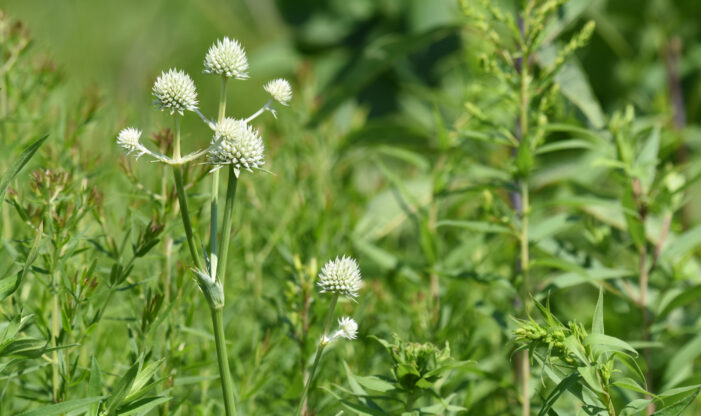
Out in the sunny prairies of our Gateway and West Meadows Trails, rattlesnake master stands tall with globe-like clusters of tiny greenish-white flowers surrounded by spiky bracts. A wide variety of insects visit, including soldier beetles and monarch butterflies. Adult monarchs sip nectar to power their long migrations, while the plant benefits from pollination. This reciprocal relationship keeps both species thriving.
August
By late summer, the large yellow flowers of the compass plant unfurl in those same prairies, their stalks reaching up to ten feet tall. The plant’s expansive leaves often align north-south to avoid direct heat from the sun, giving it its name. Among its many visitors, ranging from butterflies to wasps, is the common eastern bumblebee. This plump, fuzzy pollinator is especially efficient, transferring pollen quickly as it moves between flowers.
In the sandy prairie just west of our Visitor Center, hoary vervain sends up spears of tightly packed blue-violet flowers. These blooms open gradually from the bottom up. On the leaves, you might find the early stages of the common buckeye butterfly. Females lay miniscule pale green eggs which hatch into caterpillars that feed on its leaves and stem. They gradually gain the energy needed to transform and grow their adult wings, boasting six distinctive eyespots.
September
As the season turns, New England aster brightens our Central Wetlands Trail with clusters of purple-pink rays surrounding golden centers. These late blooms are vital to insects preparing for migration. The intricately orange and black patterned pearl crescent butterfly depends on asters for both nectar and as a host plant, especially the second late-season broods.
In wetter prairie areas, white turtlehead produces distinctive white flowers shaped like a turtle’s head, true to its name. These blooms require strong, sizeable pollinators like the endangered rusty patched bumblebee. Large enough to force open the flower’s lips, it pollinates the plant in pursuit of the nectar, creating a more accessible entry-point for future visitors.
While exploring the trails this summer, see if you can spot these blooms and their partners in action. Each interaction is a small but vital thread in a larger web of life—and noticing them brings a deeper appreciation for this vibrant, interconnected world.
Sources:
Minnesota Wildflowers
US Forest Service / USDA
North Carolina State Extension Plant Gardener Toolbox
Backyard Ecology