The changing colors of leaves in our forests signal a larger change; the landscape is preparing for its winter hibernation. While many of our local birds depart for their annual migration south, this season sparks increased activity of a strong and stealthy group of raptors: owls.
Small But Mighty
Standing at a mere six inches, Northern Saw-whet Owls make more frequent appearances during the autumn months as they migrate south from Canada and Northern Wisconsin. On quiet hikes along Turtle Trail, you can occasionally hear the soft ‘hoo’ of a saw-whet as these tiny hunters rest and refuel on our grounds before continuing their journey.
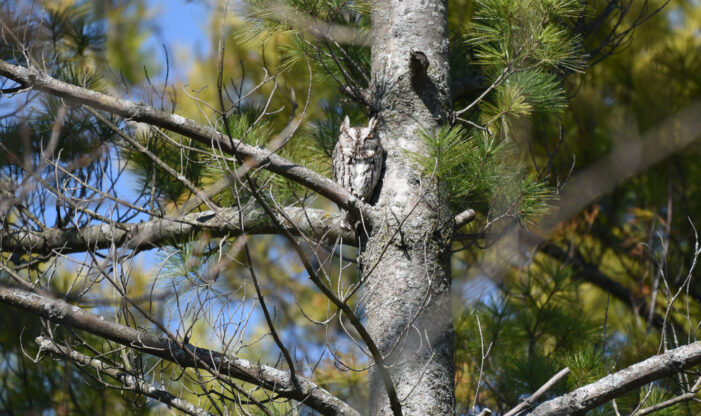
Only slightly larger at eight inches tall, the Eastern Screech Owl is more often seen and heard along our trails. Unlike the saw-whet, screech owls sport feather tufts on their heads and can appear in two different colors: gray or red. Walking through the Central Wetlands Loop, carefully examine the cavities higher up in trees and you may discover one of these little owls tightly nestled inside, snoozing in the morning sun.
Skilled and Strong
The medium-sized Barred Owl lives around wetlands and marshes. Though you may not see these secretive owls, their hoots can occasionally be heard in the West Meadows. As pairs begin defending their nesting territories in December, you may catch this distinguished “who cooks for you” call. Like screech owls, these birds of prey nest in tree cavities and require older growth forest stands with holes large enough to hold up to three offspring.
Perhaps the most formidable, nicknamed the “tiger of the sky,” is the Great Horned Owl. Residing in forests, farm fields, and even neighborhoods, they are the most frequently encountered owl species in Wisconsin. They hold the title of “strongest owl” with a grip strength eight times stronger than a human, taking down prey like squirrels, rabbits, and even animals as large as skunks. Their low “hoo hoo hoo” call can often be heard through the Woodland Loop down to Solitude Marsh.
Northern Visitors
From November through March, owls from northern latitudes find temporary homes further south. Here in the Milwaukee area, winter birders have spotted Short Eared, Long Eared, and even Snowy Owls. As competition for food gets tougher up north, they visit Central and Southern Wisconsin in search of food, such as small rodents, in our fields and at our lakefront.
As lush greenery shifts to vibrant autumn hues and finally to the subdued tones of winter, nature invites us to find relief in this calmer season. Grab your coziest attire and binoculars to enjoy quiet discoveries in the forests at Schlitz Audubon—you never know “hoo” you might hear or see!