

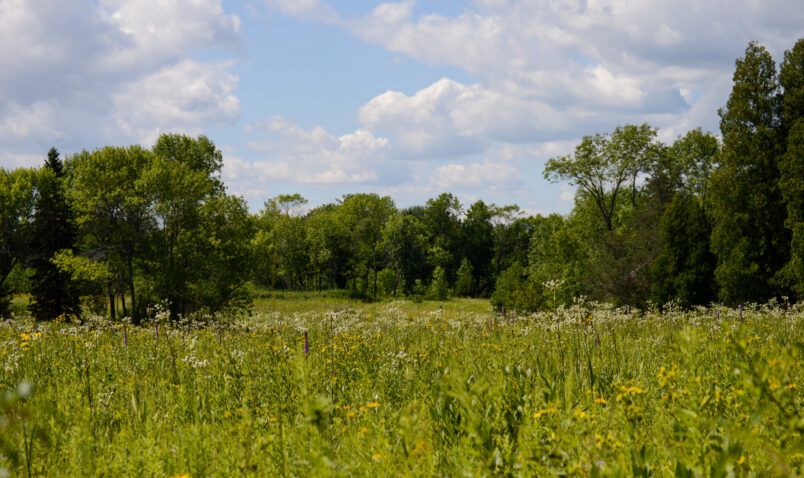
West Meadows Trail Enhancement
Our West Meadows, one of the most expansive grassland areas in northern Milwaukee County, are undergoing an exciting transformation. This project is designed to elevate both habitat quality and visitor experience, connecting people with a quieter, more remote landscape while restoring the ecological integrity of this rare wet-mesic prairie system.
Once common in our region, over 99% of our tallgrass prairies have been destroyed. Wet-mesic prairies are characterized by a dominance of tall grasses, such as big bluestem and cordgrass, and diverse forbs, including yellow coneflower, azure aster, and prairie phlox.
The project area has been impacted by historic agricultural use in addition to invasive species and encroaching woody vegetation. At the same time, sections of the trail have become difficult to access due to wet conditions. The enhancement addresses these challenges while realizing the opportunity to create greater habitat connectivity and quality.
Implementation
The two main project components are to 1) shift the westernmost trails from wetland areas to nearby upland terrain and 2) reroute another trail segment to create a continuous expansive grassland. The first component reduces ecological disturbance in the 2.33 acres of sensitive wetland zones while improving year-round usability. The second component creates 19 acres of uninterrupted prairie, which is essential for supporting bird species of conservation priority which rely on large, open landscapes for nesting.
As trails are rerouted, the Conservation Team is utilizing the following methods to restore and improve the wetland and grassland habitats:
- Controlling invasives species such as reed canary grass and buckthorn
- Planting native seeds and shrub species to provide food and habitat for wildlife, with each species and seed mix selected based on specific site conditions
- Reducing the dominance of shrubs and trees, leaving the amounts that are ideal for each habitat type
Once a healthy plant community is re-established, the team will use prescribed burns to maintain and improve the area over time. Additionally, staff and citizen scientist volunteers will acoustically monitor bat foraging in the area to measure project impacts.
Ecological Benefits
This project reflects our commitment to maximizing the quality of plant communities, increasing wildlife diversity, and enhancing ecosystem services. By restoring our native prairie and wetland systems, the West Meadows become more balanced and resilient.
The increase in native wildflowers provides critical food for pollinators, including monarch butterflies and the federally endangered rusty patched bumble bee. The wetland area ponds and surrounding sedge meadows provide excellent migratory stopover habitat for Blue-winged Teals and other waterfowl. With a reduction in shrubs and trees, the newly opened areas provide foraging habitat for bats while the continuous 19-acres of grassland offer a haven for Bobolinks, Eastern Meadowlarks, and other bird species. Retaining select standing trees and downed logs further enhances habitat complexity, providing shelter and nesting sites.
Project efforts also contribute to broader ecosystem services, including improved stormwater management, carbon cycling, and soil health. As invasive species are reduced and native plant communities reestablished, the land’s capacity to support diverse life will continue to grow.
Educational Benefits
This initiative expands opportunities for outdoor learning and discovery here at the Center. The restored area introduces learners to a dynamic habitat that is rare in Milwaukee County. Visitors can observe prairie restoration in action, explore the relationships between plants and animals, and engage with the seasonal rhythms of the land. New educational programs highlight the project’s restoration techniques, conservation goals, and ecological outcomes. By creating a more accessible and immersive trail experience, the project invites visitors to deepen their connection to nature while gaining a greater understanding of conservation’s transformative power.
The West Meadows Trail Enhancement project represents a meaningful step forward in restoring a once-degraded landscape into a more vibrant and diverse system. As trails are improved and habitats rejuvenated, this area becomes both a sanctuary for wildlife and a place of peaceful exploration for visitors.