
With Contributions from Environmental Educators Alison Schrad & Melanie Ziolecki
As daylight fades, the delicate wings of moths begin to stir. Though butterflies tend to capture our attention more, moths are no less diverse, beautiful, and ecologically important. Worldwide, scientists have identified more than 150,000 species of moths, including about 1,280 documented in Wisconsin.
Moths have a few signature traits that differentiate them from butterflies. Many species have fuzzy bodies and feathery antennae that help them detect scents and pheromones in the dark. Most are nocturnal, though some fly during the day or at dusk. Compared to butterflies’ slender bodies, moths are often stout and furry, storing energy from their caterpillar stage to fuel adult life.
Like their daytime cousins, moths undergo complete metamorphosis in four stages: egg, larva, pupa, and adult. Adults lay eggs on their preferred host plants to ensure the newly hatched caterpillars have an immediate food source. Caterpillars molt several times as they grow before spinning silk cocoons using specialized glands. Inside the cocoon, they transform into winged adults. Depending on the species, adult moths may live only a week or survive for several months.
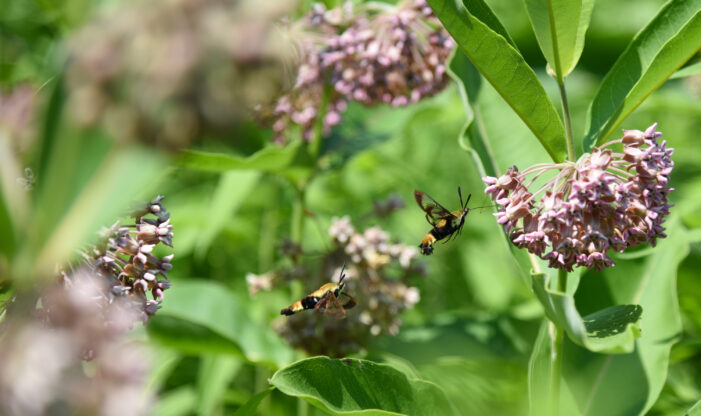
One remarkable species found at the Center is the snowberry clearwing. Sometimes mistaken for a tiny hummingbird or large bee, this moth sports mostly clear wings with reddish-brown borders and an olive-gold and black body. It thrives in meadows, shrubby areas, and forest edges, sipping nectar from flowers like bee balm.
The native tiger moth, better known in its caterpillar form as the woolly bear, is often spotted on the Center’s ample goldenrod. This fuzzy black-and-brown striped caterpillar has inspired the folk legend that wider brown bands predict a milder winter. Interestingly, they are the only fuzzy caterpillars one can safely touch; the bristly hairs of other caterpillars cause rashes. Adults are soft shades of orange, cream, and brown with scattered faint dark spots and are commonly found in prairies, roadsides, and even your own backyard.
Perhaps the most spectacular is the luna moth. With pale green wings, dramatic curling hindwings, and a wingspan reaching 4.5 inches, these moths appear otherworldly. Adults don’t have a mouth or digestive tract, so only live for a week to fulfill the reproduction necessary to carry on their species.
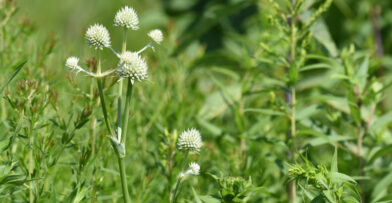
Beyond their ethereal characteristics, moths play an essential role in healthy ecosystems. They pollinate flowers that are open after sunset like common evening primrose, wild bergamot, and white boneset. Their caterpillars provide protein-rich food for birds, bats, frogs, and other wildlife. Some species also break down decaying plant matter, returning nutrients to the soil. Due to their sensitivity to pollution and habitat loss, surveying moths helps reveal when conservation intervention is needed.
You can support our local moths by planting native plants, avoiding pesticides, and reducing nighttime outdoor lighting. Citizen science projects also make a difference. During National Moth Week each July, volunteers across the country document moth populations. Closer to home, the Milwaukee Public Museum coordinates moth surveys through their Wisconsin Statewide Community Science Project (WSCS). Observing moths up close quickly reveals that nighttime ecosystems are every bit as fascinating as those seen during the day!
Sources:
Butterflies of the Midwest Field Guide by Jaret C. Daniels
Checklist of Wisconsin Moths
Moths: The Forgotten Pollinators
Butterflies and Moths of North America