
For over 20 years, our Early Childhood Education Urban Outreach Program has introduced young learners in Milwaukee’s central city to the wonders of nature-based learning. Thanks to support from the Richard and Ethel Herzfeld Foundation, our longstanding partnership with Next Door Milwaukee has ensured that thousands of children have experienced meaningful, developmentally rich encounters with the natural world.
Nature-based learning offers profound benefits for early childhood development, yet many Milwaukee children face significant barriers to experiencing it—ranging from limited access to green spaces to financial challenges around transportation and outdoor gear. Support from the Herzfeld Foundation removes these obstacles by underwriting educator time, materials, classroom resources, student busing costs, and weather-appropriate gear. With these barriers eliminated, children can explore freely in nature, engage their senses, and build foundational STEM, social- emotional, and motor skills.
Through our partnership with Next Door Milwaukee, we collaborate with leadership and educators across multiple classrooms at the organization’s Capitol Heights and Metcalfe Park campuses. Funding allows us to serve about 150 students each year, all of whom receive recurring, hands-on environmental education aligned with Next Door Milwaukee classroom themes and early learning standards. Each month, every class participates in one field trip to Schlitz Audubon and two in-classroom visits, creating a consistent rhythm of engagement that deepens learning and builds comfort in the outdoors.
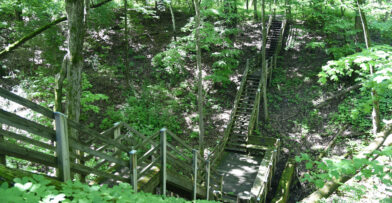
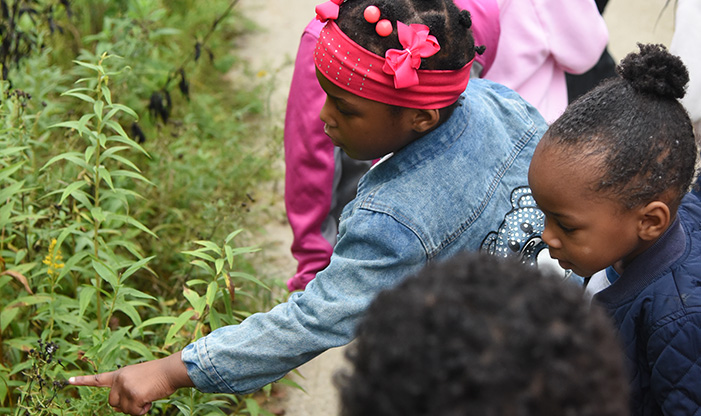
During visits to the Center, we immerse children in exploration across our forests, prairies, wetlands, and the Lake Michigan shoreline. They climb logs, listen for bird calls, search for animal tracks, investigate seasonal changes, and meet live Animal Ambassadors. In their classrooms, our educators lead sensory-based lessons using natural materials, storytelling, music, movement, and introductory science—all designed to spark curiosity, support developmental milestones, and promote school readiness.
The outcomes of this program have been transformative. Participating children have demonstrated remarkable growth in their ability to observe, interact with, and respect nature. They have also developed independence and problem-solving skills, having learned to put on their own outdoor gear and move through landscapes that change dramatically throughout the year. Perhaps most importantly, they no longer see the outdoors as a distant concept, but as a living, breathing environment that they can interact with, understand, and care for.
The program also has a meaningful impact on teachers. Our educators learn the needs and goals of Next Door Milwaukee teachers and students, and in turn provide experiences that help integrate nature themes into everyday curriculum and model environmental education strategies. As a result, teachers have reported greater confidence in weaving nature-based activities into their instruction and increased student engagement.
The Herzfeld Foundation and Next Door Milwaukee are essential partners in providing these life-shaping experiences. We extend our deep gratitude for their shared commitment to Milwaukee’s youngest learners. Together, we are cultivating curiosity, confidence, and a lifelong connection to the natural world that can continue to grow long after the school year ends.