
The quiet hush of winter and the New Year invite us to slow down, reflect, and connect with what matters most. The natural world offers us many gifts throughout the year: the joy of spring bird song, the peace of a forested stroll, and everyday necessities, like clean air and water. We can reciprocate by taking conservation actions as individuals and alongside our community of neighbors, friends, family members, and coworkers.
Salt Responsibly to Protect our Waterways
Winter salting helps keep roads and sidewalks safe, but it comes with a hidden cost. As snow melts, excess salt washes into rivers, lakes, and groundwater, harming freshwater plants and animals. Thankfully, there are steps you can take to prevent this pollution.
Before reaching for the salt, grab a shovel. Clearing snow early and often reduces the need for salt in the first place. If you do need a deicer, choose wisely. Traditional rock salt (sodium chloride) loses effectiveness below 15°F and is hard on the environment. Gentler options include calcium magnesium acetate (works to 20°F) and calcium chloride (works to -20°F). Sand provides traction at any temperature but should not be combined with a deicer.
Spread salt sparingly—aim for gaps between the grains, not a layer or pile of white. A single 12 oz. coffee mug of salt is effective for a 20- foot driveway or 10 sidewalk squares. After the snow has passed, sweep up and store unused salt to prevent it from washing away. For more information, visit the Wisconsin Salt Wise website.
Provide Food and Water for Backyard Birds
Many birds overwinter in Wisconsin, like the charismatic Blackcapped Chickadee and lively Northern Cardinal. You can help them persevere through the colder months by providing food and water, with the added benefit of more opportunities to observe these feathered companions.
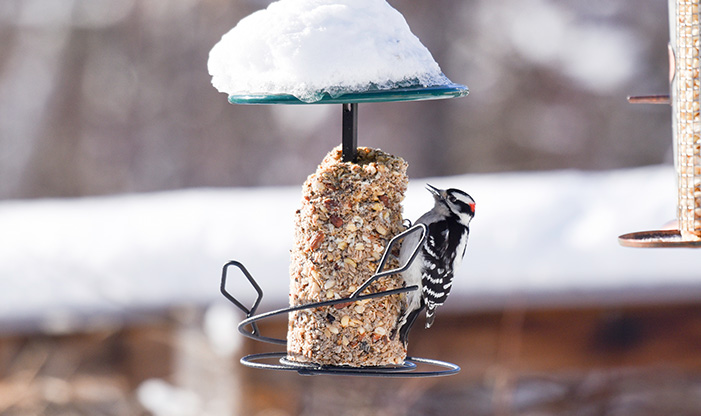
Winter food can be scarce, and birds need to eat more just to stay warm. Fill feeders with high-energy foods like sunflower seeds, suet, peanuts, and mealworms. Aim to refill daily, especially in the late afternoon to help birds through long, cold nights. Avoid window collisions by placing feeders either within 3 feet of the window or more than 10 feet away. Outside of the winter season, you can also plant trees and shrubs that provide winter fruit such as hackberry, juniper, serviceberry, crabapple, highbush cranberry, and nannyberry.
Water is just as critical, as melting snow costs birds valuable energy. Place a sturdy birdbath in a sunny, sheltered spot and refresh it regularly. You can purchase a heated birdbath or swap in a new saucer of water each morning. Avoid antifreeze or glycerin— they’re harmful to birds.
Create Shelter for Wildlife
Animals need safe, warm spaces to conserve energy, hide from predators, and take cover from storms—and we can help provide them! Create brush piles by stacking branches into a pyramid, layering boughs and leaves for insulation. Discarded Christmas trees are another great option for instant shelter. Install roosting boxes designed to hold multiple birds or repurpose birdhouses by cleaning them out and insulating them with foam weatherstripping to keep in warmth (don’t forget to remove it in the spring!).
To avoid disturbing hibernating wildlife, be sure to check compost heaps and bonfire piles before digging or lighting.
Volunteer!
If you prefer to stay cozy inside, try citizen science projects like Snapshot Wisconsin, which uses trail cameras to monitor wildlife statewide, informing management decisions. At Schlitz Audubon, our Feeder Watch program runs from early November to late April and lets volunteers spend peaceful hours in our Great Hall identifying birds in our Feeder Grove observation area.
If you love being outside and active amongst beautiful landscapes, try joining our Land Stewardship team! In winter we focus on removing harmful, invasive buckthorn, making way for diverse native plants to thrive and support local wildlife.
Want to take your skills further? Sign up in January for the Wisconsin Master Naturalist program to join a statewide network of skilled volunteers dedicated to conservation, citizen science, and environmental education.
Embracing Winter Conservation Together
Every small action makes a difference. When we act together, our impact multiplies; conservation is more powerful, and more joyful, when it’s shared. So don’t go it alone! Invite a friend, family member, neighbor, or coworker to join you in these actions.
At Schlitz Audubon, we’re here to support you and your community every step of the way. Let’s make this a season of connection, stewardship, and collective action for the wild places we love!