
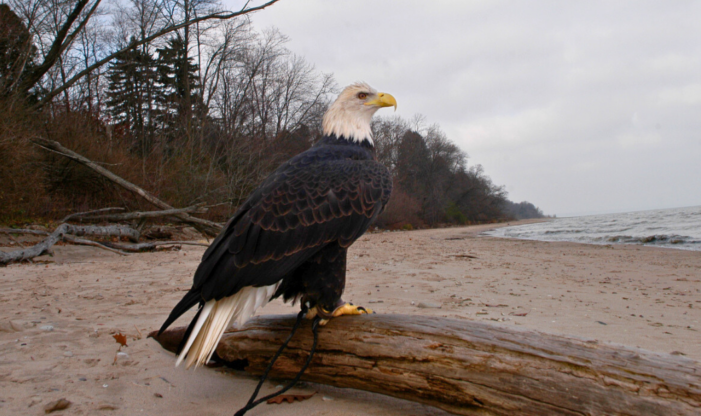
Standing at three feet tall and weighing in at twelve pounds, our male Bald Eagle Glory is one of the Raptors of Schlitz Audubon’s largest birds. He’s considered our patriarch as the oldest male raptor in our feathered ambassador family.
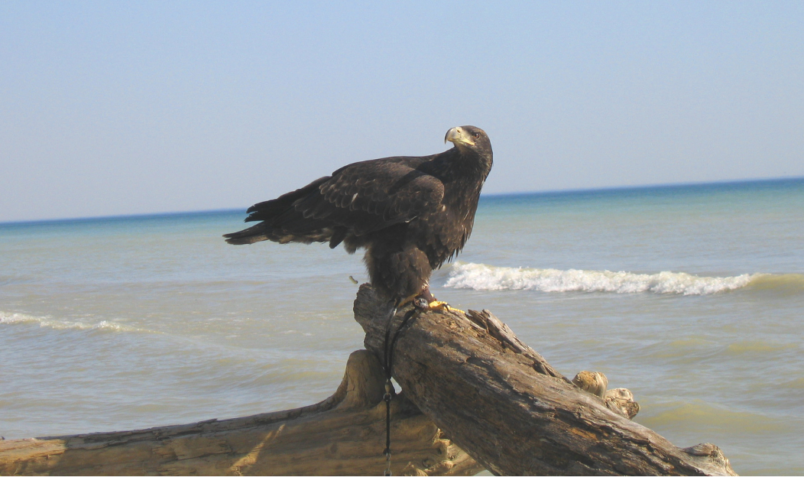
Glory hatched in the wild in 2001, his nest overlooking the Wisconsin River near Sauk Prairie. At a mere three months old, it was time for him to take his first bold leaps into the air. During this essential period of learning to fly, Glory crashed and found himself grounded near the water. A fisherman on the river came across the young eaglet who was obviously injured. Through quick thinking, the fisherman wrapped Glory up in his jacket and brought him to a nearby wildlife rehabilitation facility.
After x-rays and a full exam, rehabbers discovered that the phalanges bones at the tip of his wing were broken. His bones healed over time, but during the process, he was exposed to his human caretakers too much. At young ages, birds begin to associate with and connect to their parents – this is known as imprinting. Unfortunately, if a human is in close contact with a bird during this phase, the young one will become imprinted on them. This is what we refer to as a ‘human imprint’. In Glory’s case, his human caretakers found that he unintentionally imprinted on them. This condition is permanent and a bird like this cannot be released into the wild because they do not have the skills to survive.
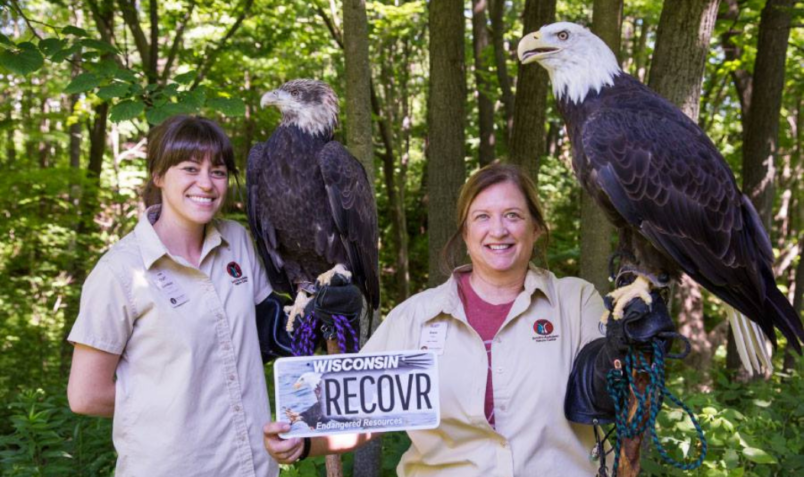
At just under one year old, Glory moved to Schlitz Audubon Nature Center. Now, at 25 years old, he has experienced the Raptor Program’s growth and has been a leader through it all. In 2008, he saw the Program renamed from ‘Wings & Things’ to ‘Sky Hunters’ and, more recently, to the ‘Raptors of Schlitz Audubon’. In 2010, Glory partnered with Harley Davidson and made regular appearances at their Milwaukee museum. He’s attended events at Harley dealerships to celebrate milestones and has visited the Wisconsin State Fair every summer since 2006 in the We Energies Energy Park to spread conservation messages. In 2015, Glory and his young eagle coworker, Valkyrie, were invited to the Wisconsin Department of Natural Resource’s unveiling of the Endangered Species license plate featuring an eagle in flight.
When not out in the community educating the public about his species, Glory immerses himself in a number of activities. During the summer months, he goes fishing in his large water basin to catch bluegill brought in by his caretakers. Nesting season for eagles starts mid-winter and can run into early summer. Following his instincts, Glory spends those months building nests with a large stock of sticks provided to him. Although his nest building consists of moving branches from one side of a platform to another, all of his caretakers assure him that it’s very impressive!
Glory may not be seen as frequently at programs because he’s at his best in controlled environments. He’s most comfortable in rooms with sitting and attentive observers, leaving the louder and more stimulating program venues for his fellow feathered companions. The Raptor Staff’s priority is to ensure that each ambassador is set up to succeed in their role. To do this, we identify each bird’s unique strengths and comfort levels while building their confidence as ambassadors and respecting both their needs and limitations; every bird is different.
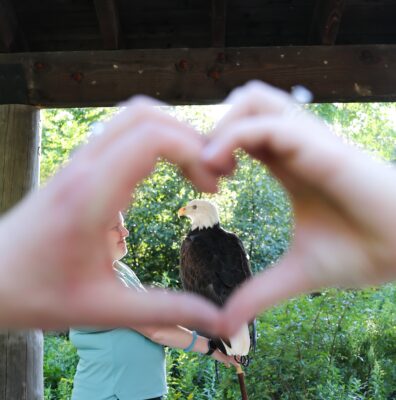 Glory is a sensitive yet powerful giant. Keep an eye on our social media posts on Facebook and Instagram for occasional Raptor Saturdays that he will attend. You can also spend time with him at Xtreme Raptor Day in November, watching him at our grassy lot as he collects materials for his beloved nests.