
With contributions from Laine Cotteleer, Tom Finley, and Erin Toohey.
If you’re an early riser, you’ve probably heard the trees and skies come alive just before dawn—chirps, trills, and rustling wings greeting the sun. Night owls, on the other hand, might catch the quiet calls of creatures that wait for darkness to become active. Like people, animals follow different daily rhythms depending on when they have the most energy and are best equipped to thrive.
In the natural world, this rhythm is described in three ways: diurnal, nocturnal, and crepuscular. Diurnal species are most active during the day, nocturnal species come alive at night, and crepuscular species prefer the in-between hours of dawn and dusk. Each approach to the 24-hour cycle has evolved over time, shaped by food sources, predators, competition with others, and temperature.
This spring, you might encounter three birds at Schlitz Audubon that exemplify these rhythms: the White-breasted Nuthatch (diurnal), the Eastern Screech Owl (nocturnal), and the American Woodcock (crepuscular). Together, they offer a window into how and why animals spend their days and nights on different schedules.
Why Animals Keep Different Hours
There’s no single “best” time to be active; each schedule offers its own set of tradeoffs for survival. Animals have adapted behaviors and physical characteristics to maximize the advantages while avoiding drawbacks.
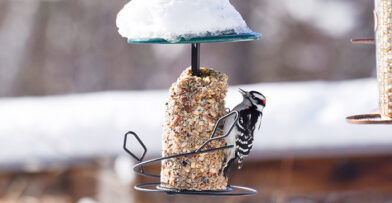
Diurnal wildlife, such as the White-breasted Nuthatch, benefit from full daylight. It’s easier to find food, spot potential mates, and navigate their environment under the sun’s warming rays. However, daylight also makes them more visible to predators such as Cooper’s and Sharp-shinned Hawks. The nuthatch’s short tail helps it balance with its head up, giving a wider field of vision to spot danger, while its small, light body allows it to dart swiftly through trees to evade predators.
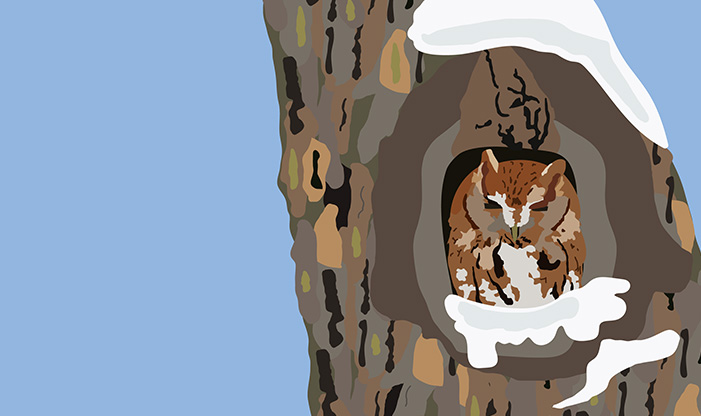
Nocturnal animals, like the Eastern Screech Owl, take advantage of the quiet night’s cover of darkness. They avoid the hotter months’ midday heat and reduce competition from daytime hunters by using exceptional low-light vision and finely tuned hearing. While they rest in tree cavities during the day, their bark-like feathers keep them hidden from predators such as large mammals and hawks.
Crepuscular species, including the American Woodcock, find their niche in the edges of the day. Twilight offers cooler air, reduced competition, and lower light that provides some protection from predators, though daytime hunters may still be active and posing a risk. Woodcocks have evolved long, flexible bills and large, keen eyes positioned high and far back on their heads, which allow them to forage in dim light while watching for danger at the same time.
Though these categories help us understand general patterns, nature rarely follows a strict clock. As the seasons shift, food becomes more or less available, predators come or go, and nesting demands change, birds adjust their schedules accordingly. An owl feeding a growing brood might hunt earlier in the evening and a woodcock facing a cold snap may stretch its foraging into daylight hours. Flexibility is key to survival.
Now, let’s imagine a typical early April day and night at Schlitz Audubon for each of these three birds.
Dawn
The Eastern Screech Owl is ending its night. The male often makes one final hunting trip before returning to the tree hollow where his mate is sitting on their eggs. He may bring her a meal or cache it for later before settling in to rest, his feathers blending seamlessly with the tree bark.
Out in open fields and along forest edges, the American Woodcock is finishing up its own night shift. After many hours of foraging using its slender, flexible bill to “feel” for earthworms underground, it may perform a few last “peent” calls before hunkering down in the leaf litter. The male is less likely to perform his famous acrobatic flight displays at dawn, as he’s tired from the previous evening’s courtships and knows the risk of predation grows as more light fills the landscape.
Meanwhile, the White-breasted Nuthatch is just starting its day. After spending the night tucked inside a tree cavity or dense branch cluster, it flits energetically from trunk to trunk. With its distinctive “yank-yank” call, the nuthatch scours the bark for insects. Mornings are its busiest hours, when sunlight and warmth stir insects into action. Nesting season is fast approaching, so couples may also seek a site to start their new brood.
Midday
The nuthatch continues its rounds but at a slower pace, taking time to rest between foraging trips. It keeps a sharp eye on the sky for hawks and crows.
The woodcock lies low in the tall grass or prairie edge, motionless and hidden. Its camouflage is exceptional—brown, gray, and rust tones matching last year’s fallen leaves. Here it avoids daytime predators and waits for darker, safer hours to feed and mate.
The screech owl rests. Its camouflage is so precise that even seasoned birdwatchers might overlook it.
Dusk
The nuthatch makes its final foraging trips, filling its belly for the night ahead. When the light begins to dim, it retreats into a safe tree hole or dense evergreen to roost.
The woodcock, however, is just warming up. At twilight, males take to the air for one of the most extraordinary courtship displays in North America. After a few nasal “peent” calls, the bird spirals upward in widening circles—sometimes climbing hundreds of feet—before plummeting back down in a musical, fluttering descent. Males defend their territories vigorously and forage between displays, replenishing energy. Their flamboyant dance is strategically performed at dusk, when it’s still visible enough to capture the attention of females without making them too vulnerable to daytime predators. When not watching the males, females search for suitable ground where they can dig out their small, shallow nests.
As dusk deepens, the screech owl awakens and begins hunting, gliding silently between trees. His feathers are designed to muffle sound, allowing him to approach unsuspecting prey. Mates keep in touch through even-pitched trills or “bounce songs,” and the male brings his mate a meal of small mammals, birds, or insects he captures. As a relatively small prey owl, he must stay alert as he moves through the woods, watching for larger owls that may pose a threat.
Night
The screech owl is now fully active under the moon’s soft beams. He perches silently, listening for the faint rustle of a mouse or splash of a frog. With one swift, soundless swoop, he strikes. Between hunts, he rests and surveys, his round yellow eyes glowing. Though the male does most of the hunting during nesting season, the female may take a break from sitting on their eggs to stretch her downy wings and find a tasty morsel.
The woodcock resumes foraging, bobbing rhythmically as it searches for worms by probing the soil with its long bill. Its large, sensitive eyes allow it to move comfortably even in near darkness.
The nuthatch is fast asleep in its roost, feathers fluffed to conserve warmth, hidden from nighttime predators.
Experience Them at Schlitz Audubon
Each of these species, and the many other animals that share our local ecosystem, has found ways to survive within the 24- hour rhythm. Their behaviors, shaped by countless generations of evolution and adaptation, allow them to coexist in the same habitats.
For those who enjoy viewing wildlife at Schlitz Audubon, understanding these patterns offers a new layer of appreciation. Visit the Feeder Grove or take a morning Bird Walk to spot nuthatches gobbling up seeds or clambering headfirst down trees. Join us for Woodcock Walks in early spring to watch their remarkable sky dances at dusk. Experience wild screech owls during an evening Owl Prowl or meet our resident screech owl ambassadors, Baron von Screech and Gimli, during our Raptor Programs. From sunrise songs to midnight calls, every time of day at Schlitz Audubon holds its own story of survival.